Uncommon Whitetails: Antlered Does

Olivia Triltsch • November 20, 2025

If you have ever seen a deer with velveted antlers at strange times of the year, it may have been a rare sighting of an antlered doe. Unusual circumstances like this allow for the antlered and antlerless deer tags to still apply as imposed by the Michigan DNR deer regulations, as it can be difficult to identify a doe from a buck while in the field, aside from the presence of antlers. Often, hunters who tag an antlered doe do not find out it is a female until they go to field dress their kill. 

Antlered does are uncommon as they occur only at a rate of 0.104% according to Deer and Deer Hunting. However, there is the ability to find hermaphroditic white-tails, which do not possess the ability to carry young and have both female and male organs, which can be hard to identify. A pseudohermaphrodite (cryptorchid) has internal male organs, which can be hard to identify if a hunter does not know what to look for. Most antlered does that are reported are expected to be a case of a hermaphroditic deer rather than a true antlered doe.   
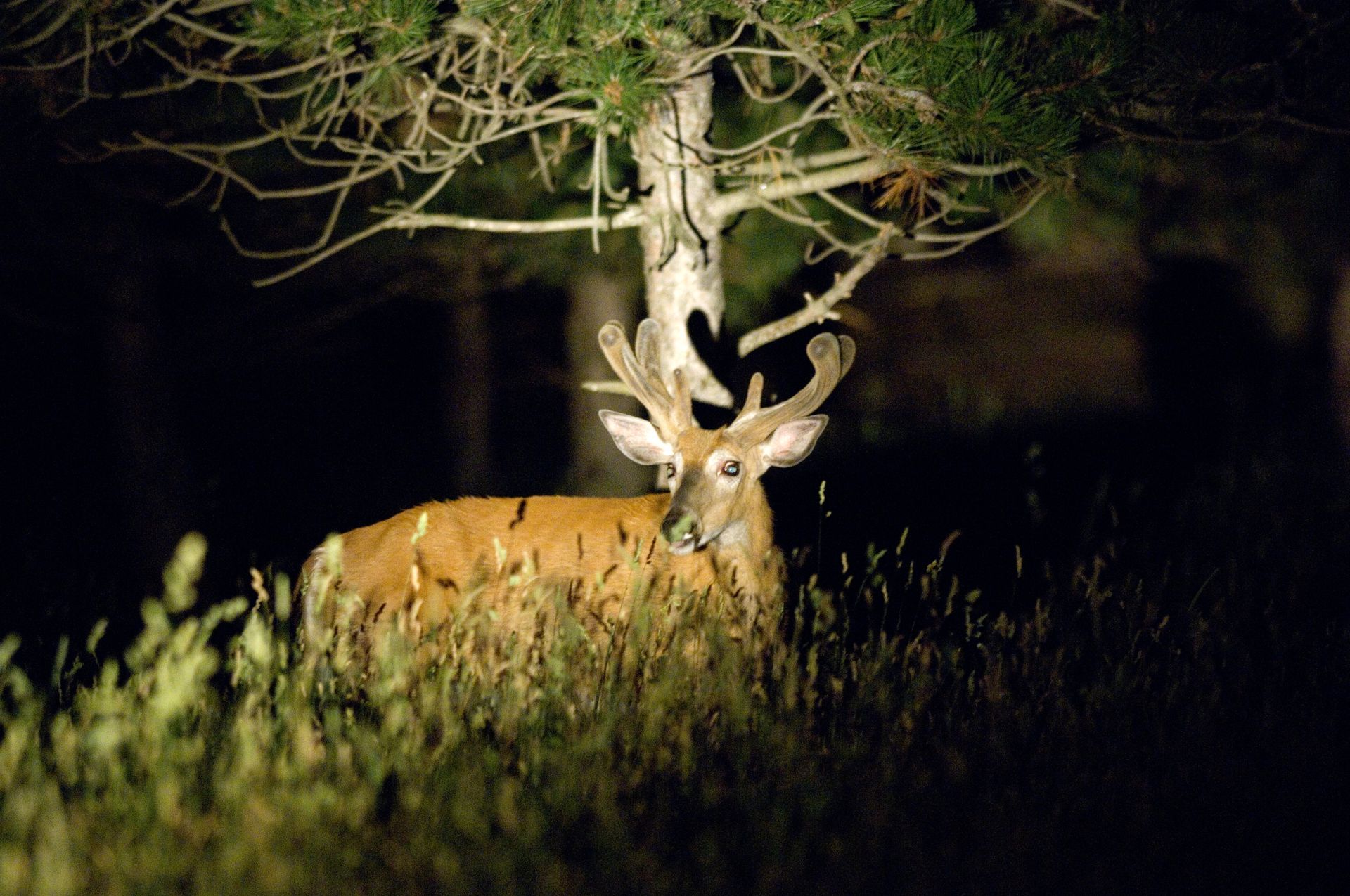
A 1960 report in the Journal of Mammalogy by Haugen et al. recognizes that most antlered does are fertile females with velvet year-round. The presence of antlers on a doe is due to heightened testosterone levels in the body, according to Penn State College of Agricultural Sciences. One sign of an antlered doe is that their antlers do not drop and regrow like those of a buck and remain velveted. The shedding of velvet naturally occurs in bucks when testosterone levels rise, however, hermaphrodites and antlered does may not reach these levels of rising testosterone for the process to take place. 

Although most hunters are unlikely to come by a doe with antlers, the kill should be reported correctly. It is best practice to tag your game immediately before taking any photos and report the game within the 72-hour time required by the Michigan DNR for harvest reporting. More information can be found in the 2025 Deer Regulations Summary or by calling your local DNR Wildlife Division office.

Recent Posts
By Olivia Triltsch May 21, 2026
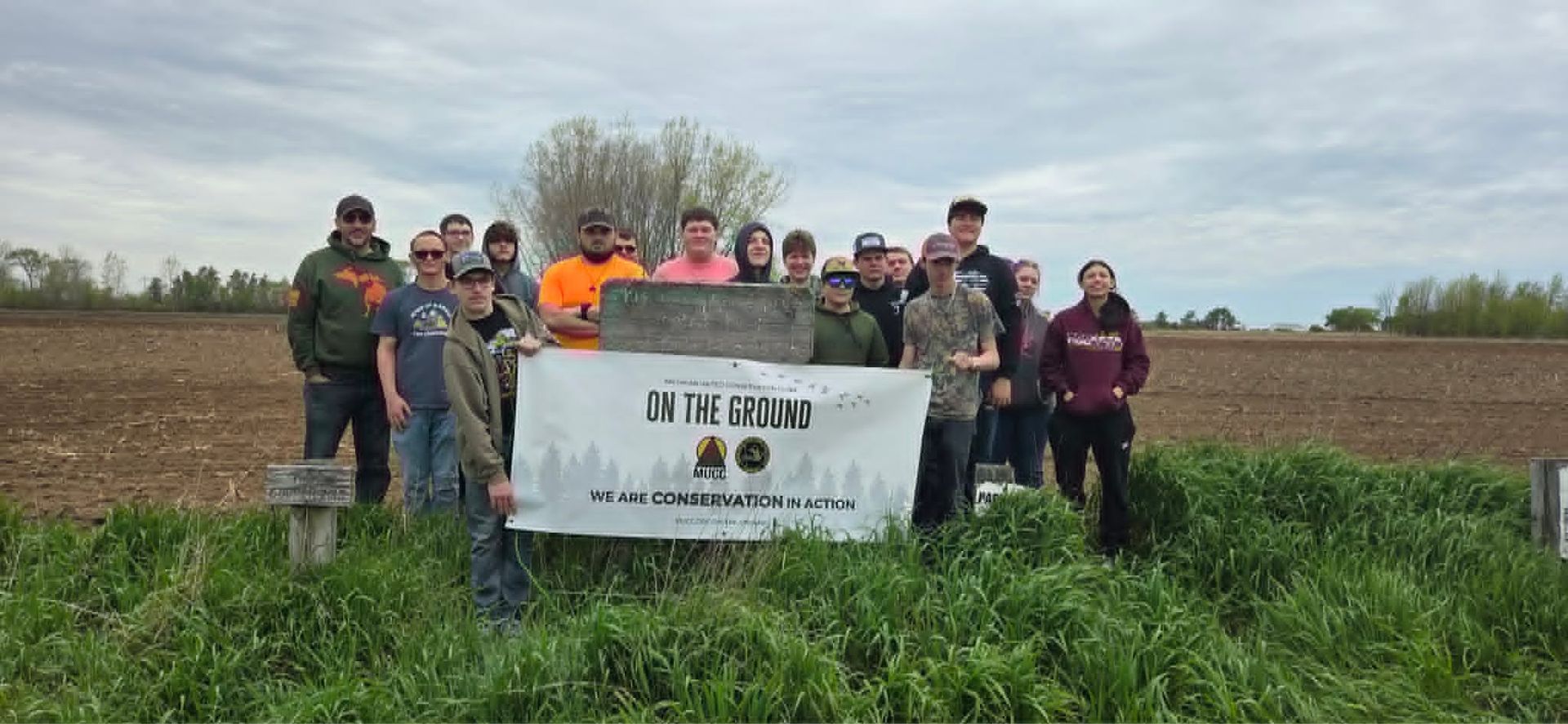
On Friday, May 15, 2026, high school students who are part of the Reese High Outdoors Club joined MUCC’s On the Ground Junior program and the Michigan Department of Natural Resources (DNR) at the Denmark Township Mini State Game Area. Students completed a wildlife habitat improvement project by clearing a grassland habitat of invasive woody growth maintained for pheasants. Using the cut vegetation from the area, students constructed several large brush piles throughout the site to benefit small mammals and other wildlife in the area. Maintaining open grassland habitat is important for supporting species that rely on early successional cover for cover or feeding. Due to suppression of natural disturbances, active management helps to control woody vegetation from gradually overtaking the areas and reducing habitat quality for species that rely on the grassland. The project area is near fields planted by the DNR to provide both habitat and food sources for wildlife, making these improvements part of a larger habitat management effort on the property. In total, students directly improved 10 acres of wildlife habitat through this project. Beyond the on-the-ground impact, the event also allowed students to try a hands-on conservation experience and the ability to contribute to habitat management and public land stewardship in Michigan. Projects like this continue to demonstrate the value of engaging the next generation in Michigan's outdoor heritage and wildlife conservation efforts.
By Olivia Triltsch May 7, 2026
On Saturday, May 2, 2026, a group of dedicated volunteers joined Kirtland's Warbler Alliance, Huron Pines, Saginaw Children’s Zoo, and MUCC's OTG program in planting approximately 4,800 jack pine saplings within the Grayling Forest Management Unit in Crawford County. Jack pines are a critical nesting habitat feature for the once-threatened Kirtland’s warbler. In total, volunteers directly impacted about 7 acres of land were prepared by the Michigan DNR for this planting to allow volunteers to maximize their efforts across the land. This is one of our annual events that is perfect for helpers of all ages and interests.
May 4, 2026
FOR IMMEDIATE RELEASE: Michigan United Conservation Clubs (MUCC) announces its decision to dissolve after nearly 90 years of conservation advocacy, citing ongoing financial challenges and outlining next steps in an orderly wind-down process.
More Posts