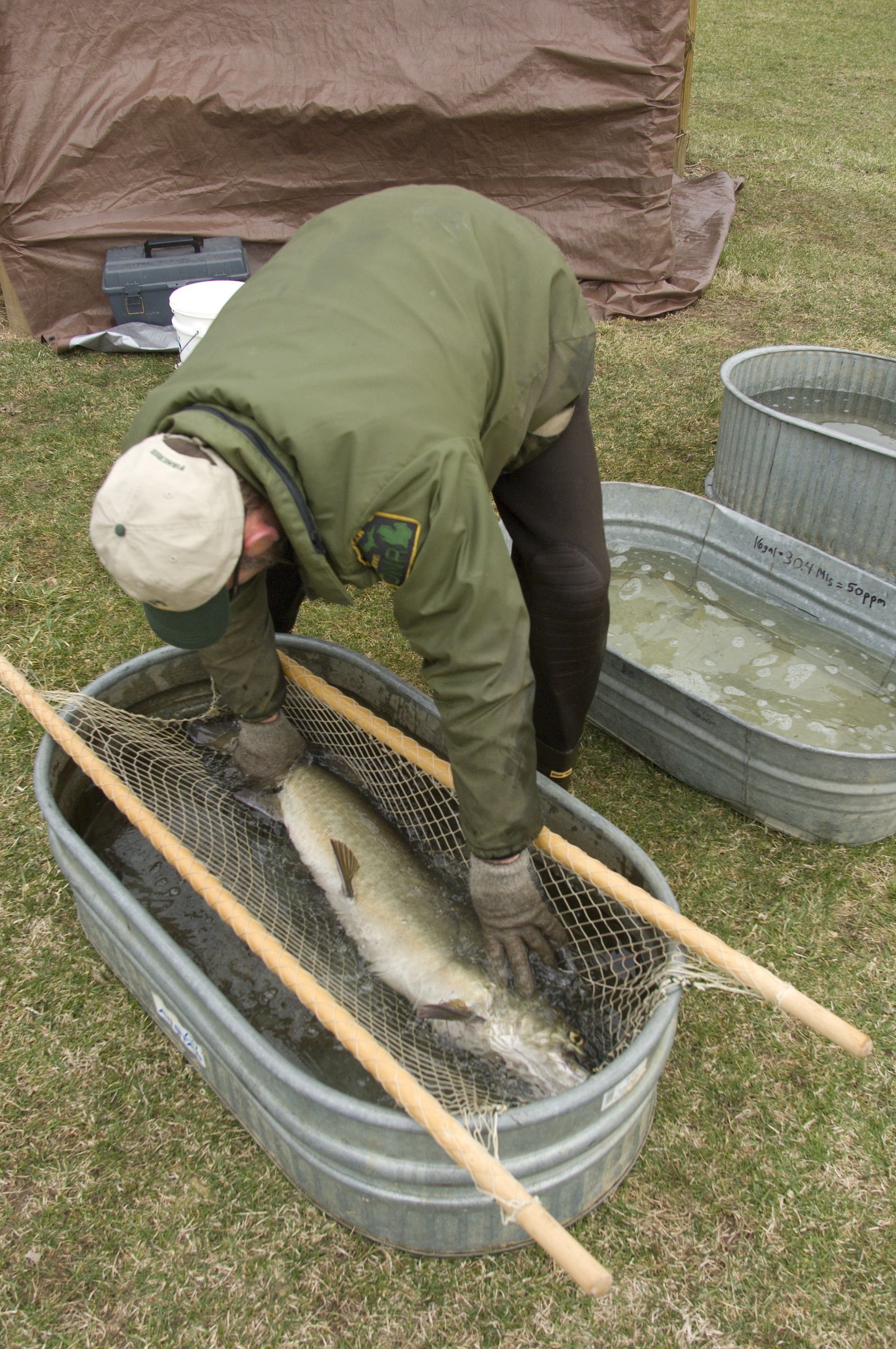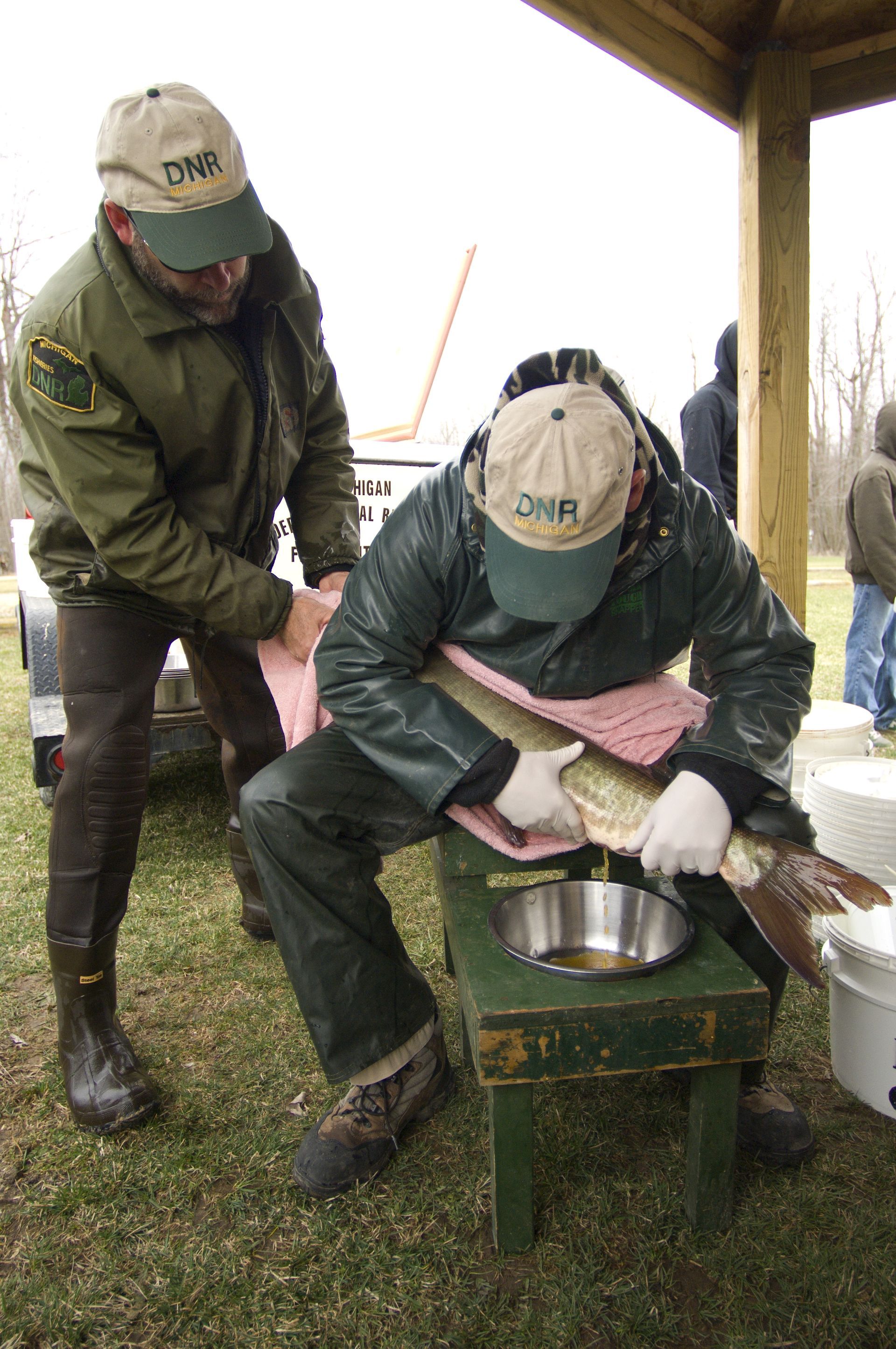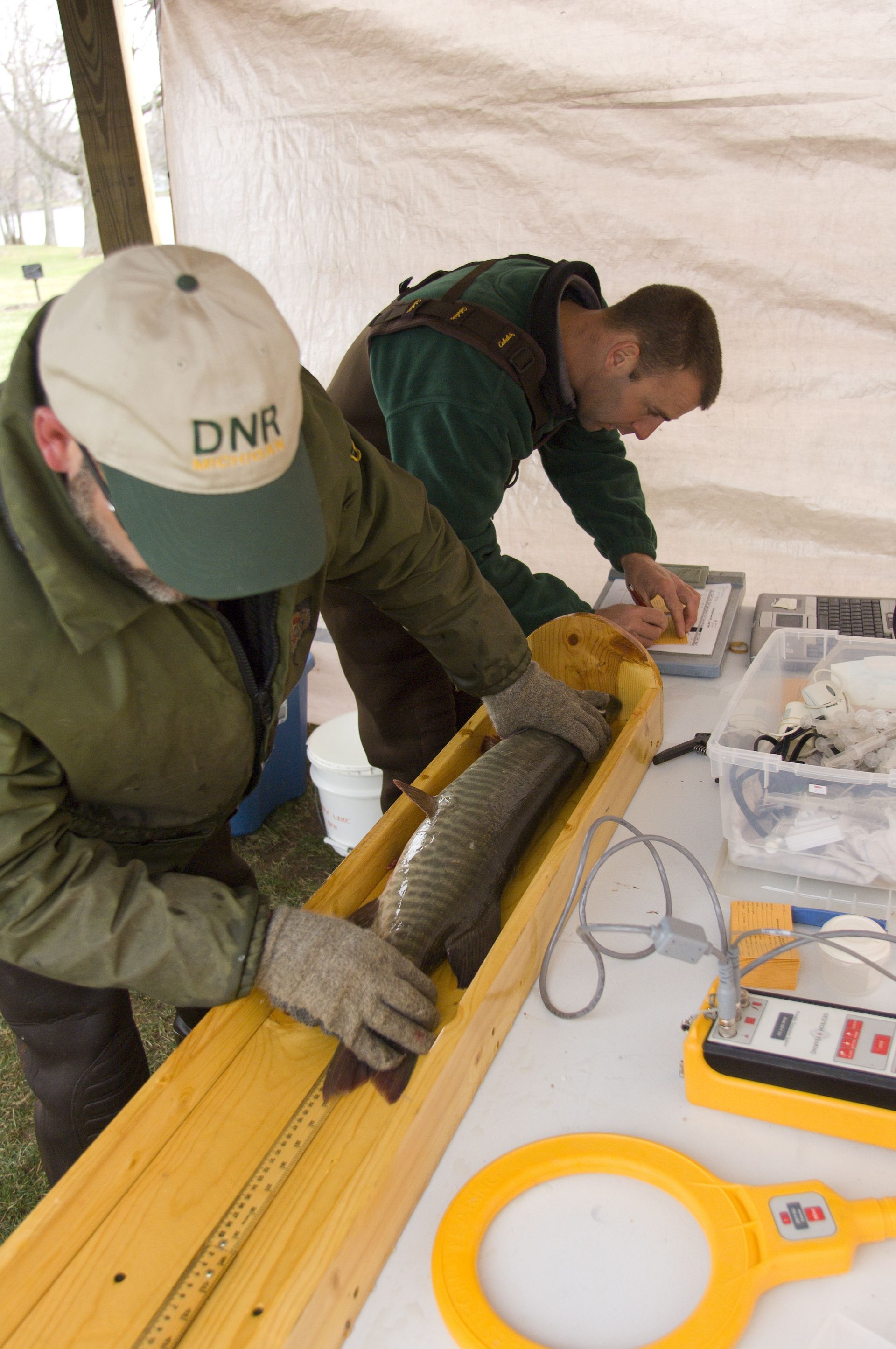
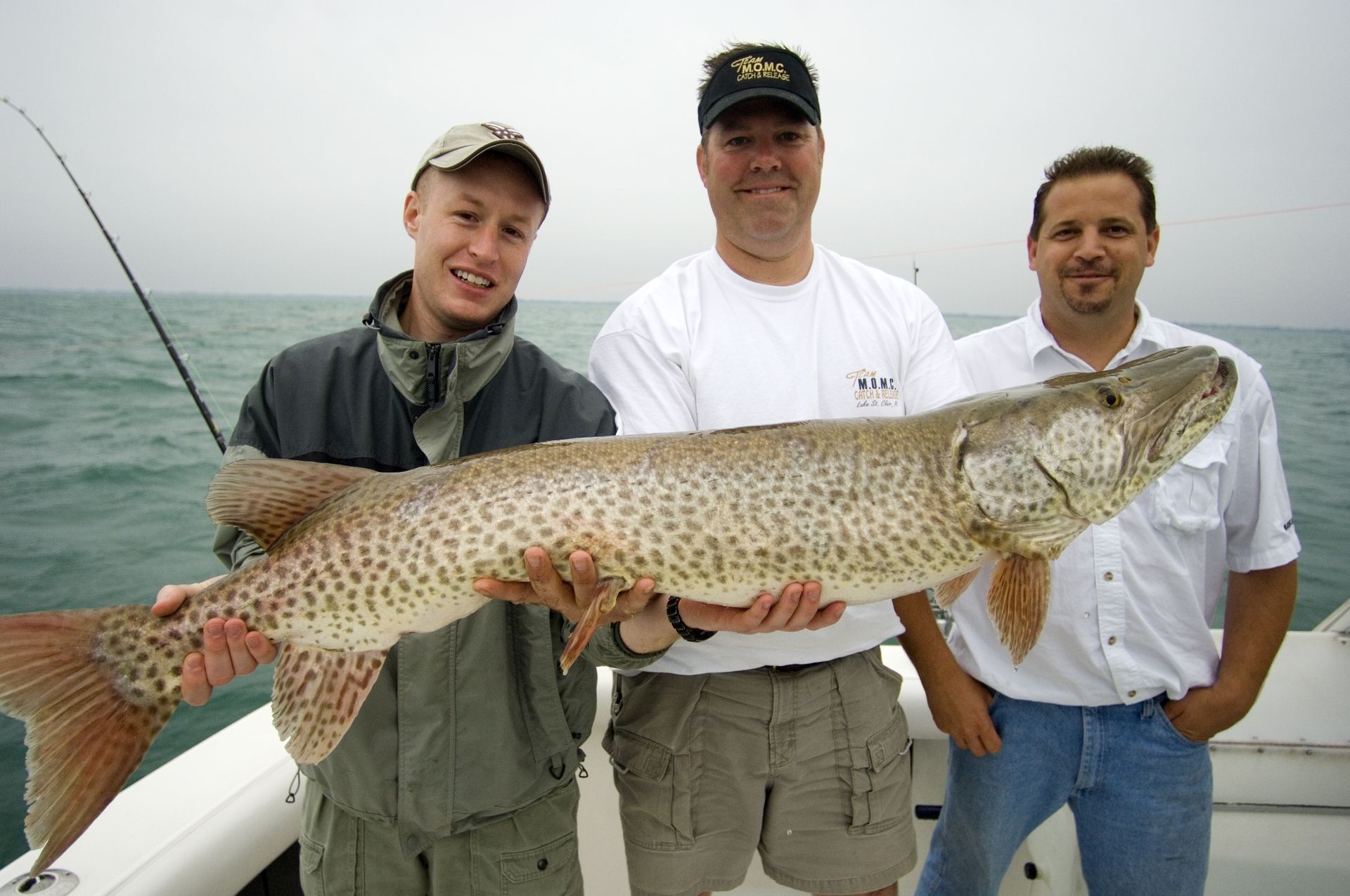
Muskellunge (Esox masquinongy) are native to Michigan and historically occupied large rivers, inland lakes, and connected waters across both peninsulas, including the Great Lakes. Early declines in muskie populations occurred in the late 1800s and early 1900s, driven by habitat loss, dam construction, and unregulated harvest, particularly during spawning periods when fish were most vulnerable, as reported by the Michigan Department of Natural Resources (DNR) Fisheries Division.
As Michigan’s fisheries program developed, muskellunge became a focal species for restoration. Stocking programs, harvest regulations, and habitat protections were introduced to rebuild populations and protect spawning success. Today, muskellunge management reflects decades of adaptive conservation, with regulations designed to allow fish to reach maturity and contribute to reproduction before they are harvested.
Photo of Muskellunge fishing in Lake Erie, courtesy of the Michigan DNR.