From Ornament to Outlaw: Oriental Bittersweet

Olivia Triltsch • December 4, 2025

History

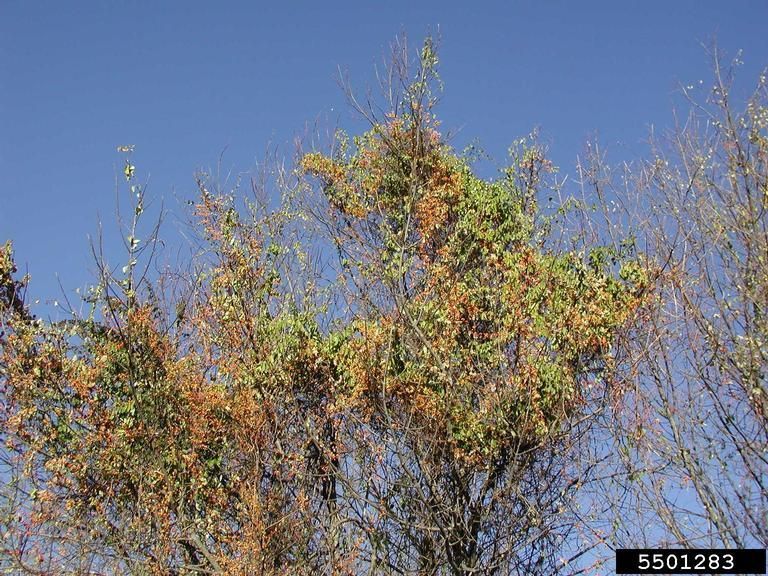
Oriental bittersweet is a vining plant native to eastern Asia; it was introduced to North America around 1860 due to its use in holiday decorations. Oriental bittersweet can also be called round-leaved bittersweet, Asian bittersweet, and oriental staff vine, but the scientific name is Celastrus orbiculatus. As with many invasive species, the plant quickly spread across the landscape from roadsides to forests. The resilience of this vine, combined with its ability to climb and smother trees, has created an extra challenge in the survival of native shrubs as their water flow and nutrients are cut off, according to Michigan Natural Features Inventory. In addition to its vining capabilities, the species can rapidly grow from seeds and by sprouting, displacing native plants and altering the natural structure of the habitat across the United States. 


Image (right): Oriental bittersweet overtaking tree canopy, courtesy of Leslie J Mehrhoff, University of Connecticut, Bugwood.org.
Current Status

The Michigan Department of Natural Resources (DNR) has confirmed this species is established in the state and is considered a high-priority invasive vine by North Country CISMA. This species is prevalent in many habitat types, spreading in disturbed sites and along hedgerows. 

Characteristics

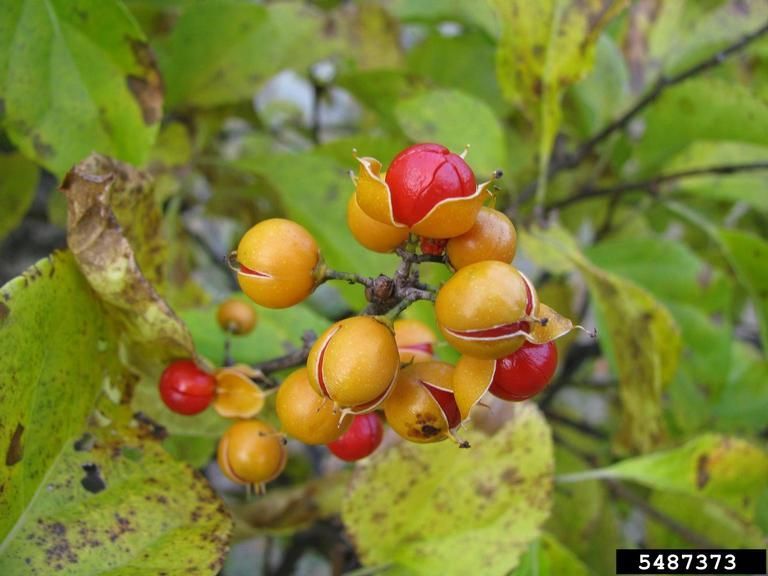
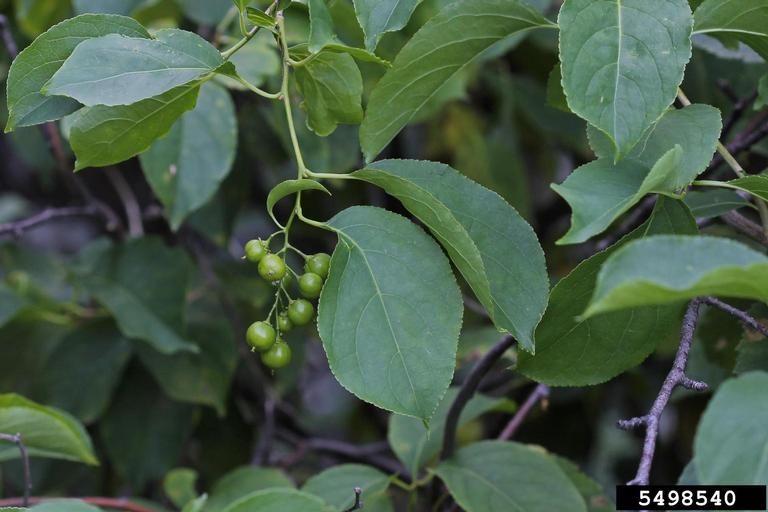
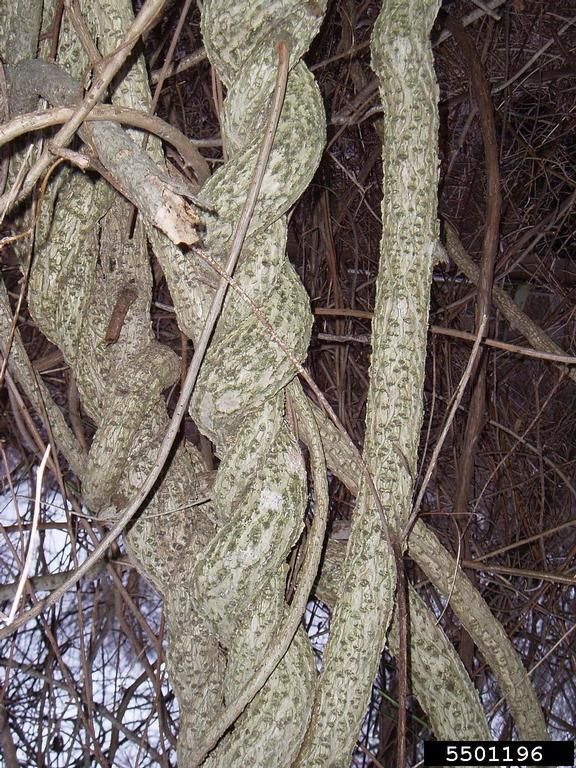
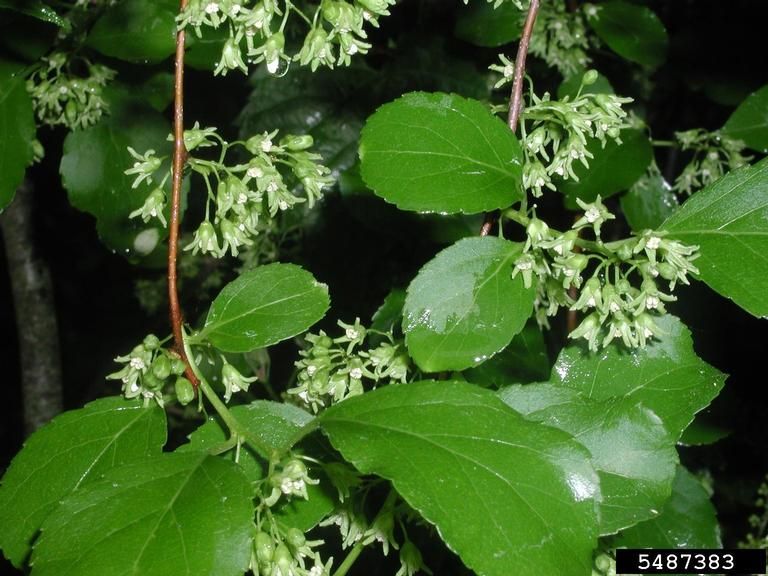
Oriental bittersweet is a woody vine that branches and twines around trees, shrubs, and other structures, reaching up to 60 feet according to the Michigan DNR. The mature, woody structure is brownish-gray with alternating, finely toothed leaves that can get up to 5 inches long, as described by the US Forest Service. Young growth of the plant is green with smaller vines than the woody encroachment in older infestations. The seeds of the vine are held within small clusters of red berries enclosed within a splitting yellow sheath. MSU Extension recognizes that these berries come from greenish-yellow, five-petaled flowers that bloom in late spring each year. 


While this invasive vine can be easily spotted as the greenery disappears in the fall, there is a native counterpart to watch out for called American bittersweet. The DNR considers this native vine to be a protected species in Michigan. Contrary to oriental bittersweet holding its fruit along the vine, the fruit of American bittersweet can be found only at the end of its vines as observed by the DNR. Additionally, the fruit of the American bittersweet also has red berries with more of an orange sheath making the colors less contrasting than that of the invasive bittersweet.

Conservation

Due to the aggressive growth of oriental bittersweet, management can be tricky, requiring the ability to monitor, remove, and spread awareness to the public. Public input on lands open to the general public can be submitted through the Midwest Invasive Species Information Network or MISIN app or online can be an easy way to report the spread. 


The species can be controlled early by removing all vines to prevent sprouting before the plant has the ability to fruit. However, MSU Extension recommends larger infestations and older vines to be controlled by applying herbicide to freshly cut vines while following the directions on the product label. 

Learn More

Education and early action can help avoid the spread of invasive species like oriental bittersweet. Before transporting a plant to be used in festive decorations, be sure to identify it to help determine the impact it could possibly have on the local environment. For more information on oriental bittersweet, including control methods, visit the Michigan DNR fact page. MSU Extension also provides valuable details on the ecological impacts of this invasive species in Michigan on their fact page. If you are looking to get involved in working to conserve habitat for wildlife, consider joining Michigan United Conservation Clubs and our fight to conserve, protect, and enhance Michigan's natural resources and outdoor heritage. Other options to help conserve Michigan include making donations or volunteering for wildlife habitat improvement. Our award-winning On the Ground program is looking for passionate volunteers to enhance wildlife habitat across the state. If you are interested in getting involved or learning more about the program, visit our habitat website

Recent Posts

By Olivia Triltsch January 15, 2026
Squirrels have been part of Michigan’s forests and woodlands since before European settlement, thriving in diverse habitats from dense hardwood forests to
By Olivia Triltsch January 8, 2026
Golden Eagles (Aquila chrysaetos) are not year-round residents in Michigan, but they have a long history of passing through the state during seasonal migrations
By Olivia Triltsch December 25, 2025
Balsam fir (Abies balsamea) is a native evergreen tree found throughout Michigan’s forests, especially in the northern Lower Peninsula and Upper Peninsula
More Posts