Reptile Awareness Day: Eastern Massasauga Rattlesnake
Reptile Awareness Day is coming up on Monday, October 21st to bring attention to the reptile class of the animal kingdom. Michigan has a diverse range of reptiles including snakes, lizards, and turtles. Within these orders, there are several listed as species of concern or of threatened status. A very unique species native to Michigan is the Eastern Massasauga Rattlesnake (Sistrurus catenatus).
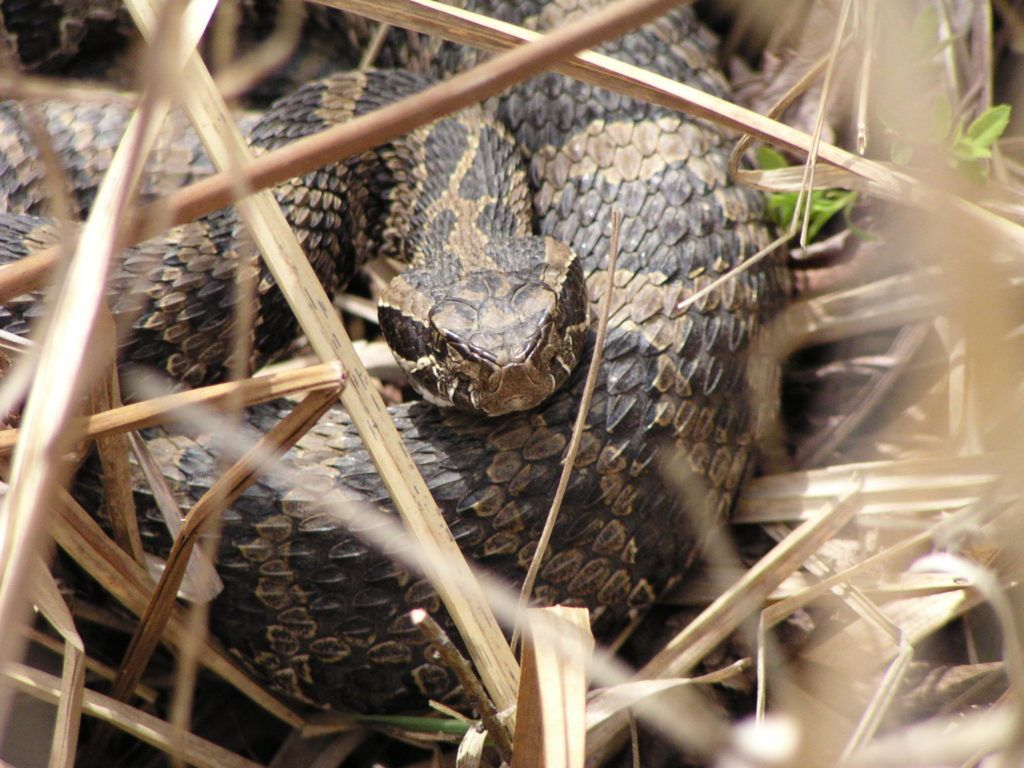
Eastern Massasauga Rattlesnake in the field. Courtesy of Michigan Department of Natural Resources.
Species Overview
The Eastern Massasauga Rattlesnake (EMR) is a listed species of special concern and is the only venomous snake in Michigan. However, they tend to keep to themselves and typically need to be provoked to bite as they prefer to vacate an area with a potential predator. If you or a pet are bitten, seek immediate medical attention.
Identification
EMRs have dark brown bow ties lined in white along the gray-to-brown body and a solid black underside. This is the only rattlesnake species in Michigan and a rattle that gains a new section with each shed. However, the typical rattlesnake rattle may not be an audible identification tactic as EMRs tend to rely on camouflage to remain undetectable. The Michigan Natural Features Inventory describes the species with a large, triangular head and characteristic elliptical, vertical pupils. Overall, this species can reach lengths up to 2 to 3 feet long. Additionally, EMR are ovoviviparous meaning they do not lay eggs but give birth to live young.
The Eastern Massasauga typically hunts prey in wetlands which lends them to the nickname of “swamp rattlers”. Consequently, the preference for this habitat type is partially why there has been a decline in numbers as wetlands are a diminishing biome. To survive the winter, EMRs typically hibernate in crayfish chimneys, small mammal burrows, and under structures like tree roots. Evidently, the Michigan DNR reports this snake ranges throughout the Lower Peninsula with no sightings in the upper. Michigan is host to the most known populations than any other area within its range, meaning conservation efforts are critical.
Conservation Efforts
.
Disease, humans, habitat loss, and fragmentation are known threats leading to the decline of this species. Diseases like snake fungal disease have the ability to negatively impact populations, especially threatened species like the Eastern Massasauga. Nevertheless, conservationists and recreationists should report sightings of disease to the DNR Wildlife Disease Laboratory at 517-336-5030. Previous research by MSU Extension indicates relocation efforts being unsuccessful as the individuals were unable to find adequate habitat sites.
Get Involved
MUCC’s On the Ground Program will be doing a riparian mast tree planting at the Maple River State Game Area on October 19th. Considering the hibernation tendencies of snakes like the Massasauga, tree plantings in riparian zones can be beneficial for more than just deer and turkeys. If you are interested in getting involved, register HERE for this event. If you are unable to attend this event, be sure to follow us on social media and become a member to be updated on upcoming events.
To report a sighting of an EMR or any animal, utilize the Eyes in the Field reporting site. To learn more about Michigan’s reptiles and amphibians, visit the DNR website.
Recent Posts