On the Ground: Volunteers Restore a Prairie Ecosystem at Fort Custer Recreation Area
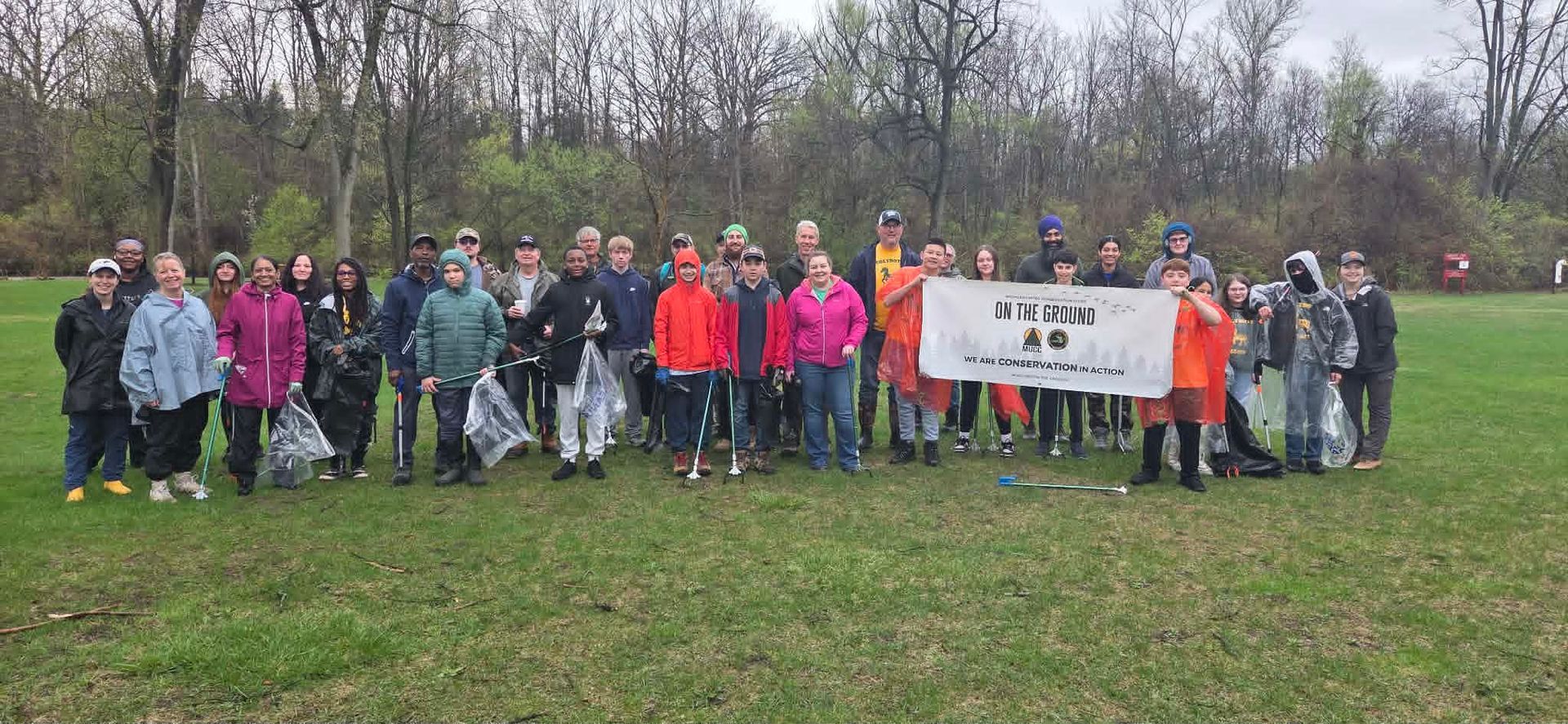
On Saturday, January 27, 2024, 18 On the Ground (OTG) volunteers gathered at Fort Custer State Recreation Area in Kalamazoo County to remove woody vegetation from a prairie management area.
In total, about 56 acres of public land were improved by the removal of woody vegetation like Siberian elm and Eastern cottonwoods. Although Eastern cottonwoods are native and noninvasive, they were encroaching into the prairie management area. Volunteers worked together to remove many small trees and shrubs using loppers and handsaws. Cut stumps were treated with herbicide to prevent future regrowth to allow native grasses and wildflowers the opportunity to grow. There was a noticeable difference in the open prairie from the beginning of the workday to the end. Throughout the day, volunteers exclaimed words of amazement when looking back at the work they had completed. Wildlife such as box turtles, small mammals and ground-nesting birds will greatly benefit from the hard work of these volunteer stewards. 
Thank you to our partner, the Michigan Department of Natural Resources (MDNR) Parks and Recreation Division for co-hosting another successful habitat project on public land! A special thank you to our volunteers for all of their hard work and dedication to habitat conservation.
The next OTG project will take place this Saturday, February 3, 2024 at the Bellevue Conservation Club. For more information and to register for upcoming events, click HERE.
Recent Posts