Michigan Hunter Education Process
With the Youth and Liberty deer hunts in the books already, archery season will be here before you know it. While many Michigan youth went afield last weekend, there are still many others who are excited about their first opportunity to join family or friends in the woods this fall. If you know a youth or adult who wants to become a new hunter this year, there are a couple of different ways to make that happen.
For anyone 10 years of age or older the first two years of the hunting experience can take place under an apprentice license. You do not have to take hunter safety to hunt with an apprentice license, but you must be hunting with another licensed hunter. For apprentices between ages 10-16, the accompanying hunter must be the apprentice’s parent, guardian or someone designated by the parent or guardian. The apprentice license is only valid for two years. After that, you must go through the hunter education program in Michigan.
While the apprentice license is a great tool, I would still highly recommend registering a new person for the state hunter education course. However, 2020, has made other plans and the traditional courses are not being offered as frequently or in their usual formats.
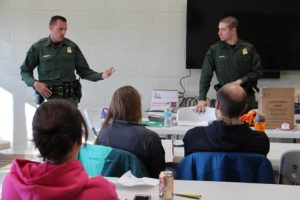
In Michigan, the successful completion of the Hunter Education course is required for anyone who wants to hunt who was born after January 1, 1960. The typical hunter education course consists of two to five sessions with a total class time of 10-12 hours, including a test and hands-on field day.
With the impact of Covid-19 here in Michigan, the DNR was forced to cancel and pause all hunter safety courses during the spring and summer. As of Mid-September, they are allowing the teaching of hunter safety in person once again.
However, with limited time, space and instructor capacity there will be fewer in-person classes available this fall than in previous years.
As a solution to the lack of available classes, the DNR has decided to temporarily waive the requirement of the hands-on field day until June of 2021. This means if you are unable to attend a traditional in-person class/field day you still have the opportunity to hunt in Michigan this fall.
To do this you must complete an online hunter education course. After completing the online course, you will receive a temporary certificate that allows you to purchase a hunting license that is valid until June of next year. This certificate will allow you to hunt this fall, but you must participate in the field day portion before its expiration next year to be considered a successful hunter education graduate.
For more information on the specifics of the temporary certificate, you can read the DNR press release linked below.
If you would like to complete the online portion of the course information can be found here: https://www.hunter-ed.com/michigan/
To find a hunter education in-person field day visit this link: https://www2.dnr.state.mi.us/recnsearch/
The post Michigan Hunter Education Process appeared first on Michigan United Conservation Clubs.
Recent Posts