Volunteer with On the Ground to Help Restore One of Michigan’s Most Endangered Habitats: The Oak Savanna
Americorps • September 25, 2023

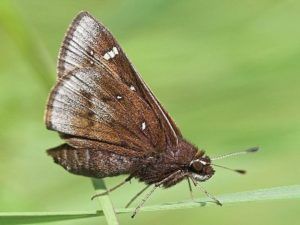
Dusted Skipper, photo taken by Steve Walter

Habitat improvement projects are always gratifying work, especially when they benefit rare habitats such as oak savannas. We often hear about how habitat restoration efforts impact charismatic species like white-tailed deer or wild turkeys, but many lesser-known species benefit from these projects just the same.

Rare insects such as the dusted skipper, grizzled skipper, monarch butterfly and numerous bumblebee species depend on habitats like oak savannas to survive. These crucial pollinators influence and benefit from prairie flowers and grasses that grow in oak savannas. Pollinators also act as indicator species, as their presence or absence indicates. Unfortunately, many of these species are threatened by habitat degradation due to fire suppression and encroachment of invasive vegetation.
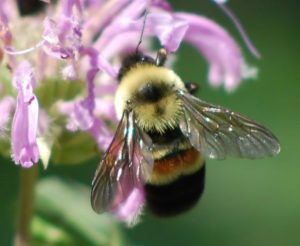
Rusty Patch Bumblebee, taken by Johanna James-Heinze

You can help restore habitat for Michigan’s insect pollinators as well as other rare species like the eastern box turtle, massasauga rattlesnake, and red-headed woodpecker by volunteering with On the Ground. On Saturday, October 7 from 9am-noon, join On the Ground in partnership with Kent Conservation District in spreading native grass and forb seeds at Cannonsburg State Game Area to increase biodiversity, as well as working to remove invasive vegetation that’s encroaching on this imperiled ecosystem.

For more information, please visit mucc.org/on-the-ground/

Recent Posts
May 4, 2026
FOR IMMEDIATE RELEASE: Michigan United Conservation Clubs (MUCC) announces its decision to dissolve after nearly 90 years of conservation advocacy, citing ongoing financial challenges and outlining next steps in an orderly wind-down process.
By Olivia Triltsch April 30, 2026
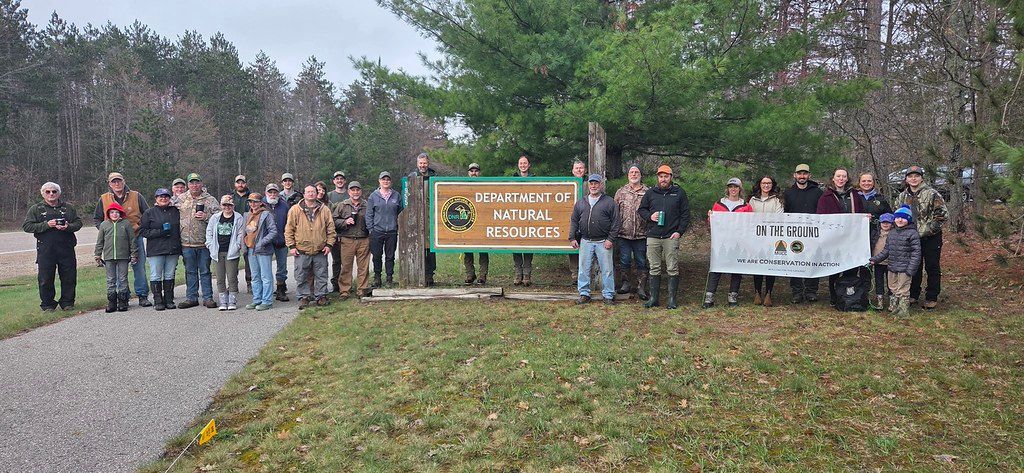
On Saturday, April 25, 2026, MUCC's On the Ground program partnered with the Michigan Department of Natural Resources (DNR), Ruffed Grouse Society, National Wild Turkey Federation, and Backcountry Hunters and Anglers for a crabapple tree planting and dump site clean-up event in the Grayling Forest Management Unit. Volunteers worked as a team to plant, compost, mulch, and fence 25 eight-foot trees at various locations in Crawford County on the public lands to offer forage for wildlife. Many species, like grouse, turkey, and deer, utilize mast-producing trees for food when other resources are not available. These trees were planted along an old logging road for both game and non-game wildlife, while enhancing the local recreational opportunities. Another group of volunteers branched off to remove trash from three dump sites on public land in Kalkaska County, which included couches, mattresses, shingles, and tires. Volunteers filled a 30-yard dumpster with trash found in the landscape in an attempt to keep the environment better than how it was found while improving future recreational opportunities. In total, volunteers directly enhanced 2.1 acres of wildlife habitat through this project.
By Olivia Triltsch April 23, 2026
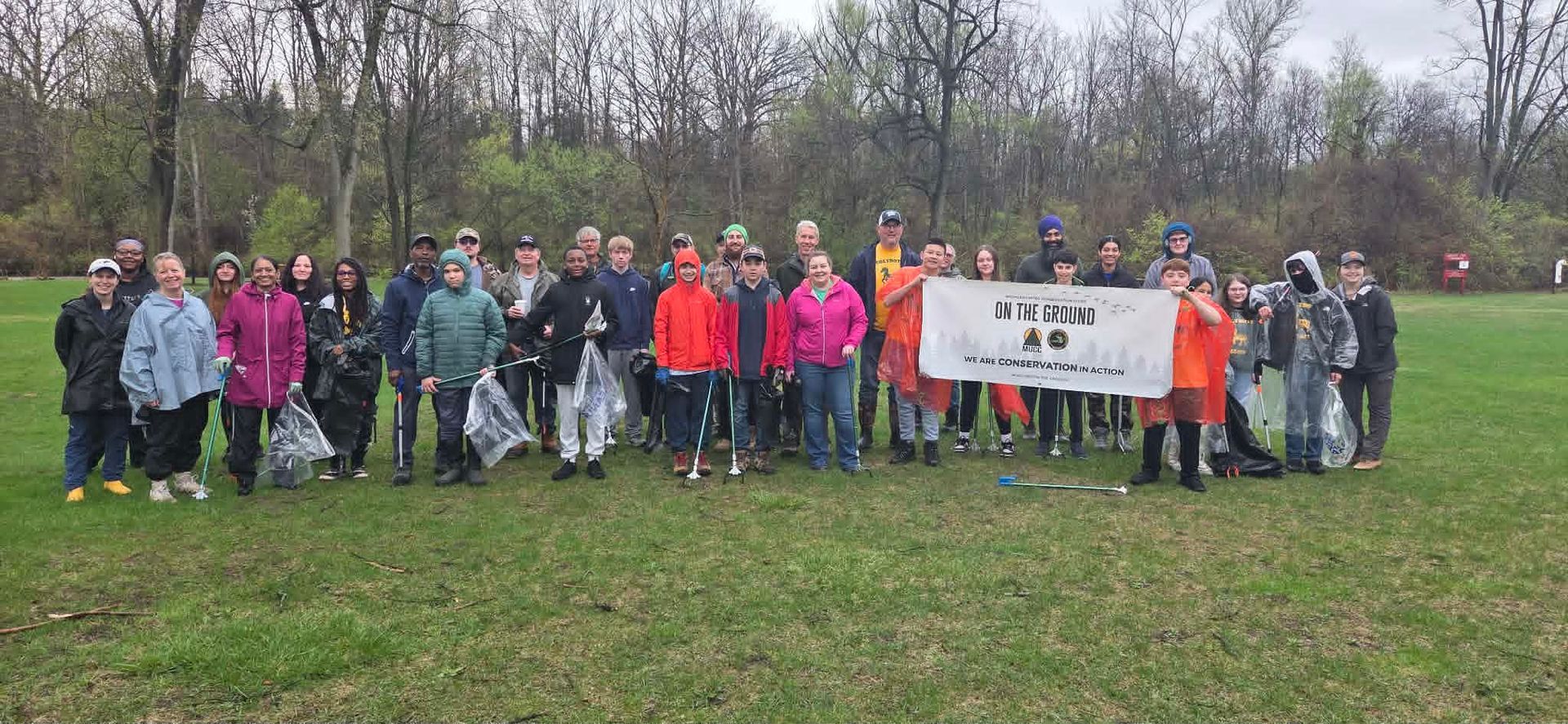
On Saturday, April 18, 2026, MUCC’s OTG program partnered with the Clinton River Watershed Council and Metro-West Steelheaders to host the annual Clinton River clean-up at Yates Park. Volunteers removed about 270 pounds of trash from the riverbanks and the surrounding watershed. Approximately 80.3 acres of fish and wildlife habitat were directly impacted by this project, in addition to improving local outdoor recreational opportunities. Cleaning up the watershed is critical for ensuring safe drinking water, safe recreation, and a clean habitat for fish and wildlife alike.
More Posts