Turkey-Time at Camp
If you would have asked me to teach 60 kids about turkey hunting three years ago, I am sure I would have given you a very funny look. My first big game hunt was a turkey hunt in spring of 2017. You could say it was love at first hunt because to this day turkey hunting has held a special place in my new collection of many hunting memories.
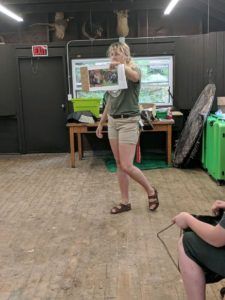 Max Bass, MUCC Camp Director, approached me a couple of months ago while building his camp itinerary and asked if I would be willing to speak to the Hunting Heritage group of kids at camp about turkey hunting. Of course, I said yes and quickly got to work constructing an hour-long presentation. There is so much about a turkey that I am sure many do not know about unless you study or hunt the bird yourself. Assuming that most of these kids have not hunted turkey before, I decided that I was going to give an overall lesson on turkey biology, habitat and how to hunt them.
Last Thursday I traveled down to Chelsea, MI to meet the 20 Hunting Heritage campers and present the program I like to call, Turkey-time. The day was hot and humid and a thunderstorm had just passed as all 20 kids piled into the art building where I had set up. One of my first questions was, “who has hunted?” Half of the kids raise their hands. “who has hunted turkeys?” Only three hands went up at that time. Great, a room full of eager learners! I reassured them that learning about the biology and habitat of turkeys might be an ear full of information but it will make them a successful, well-educated and ethical hunter. They listened well as I went over a turkey’s wings, legs, eyesight, behavior, patterns, habitat and more.
Anytime you are dealing with kids its best to have some type of hands-on interactive game or activity for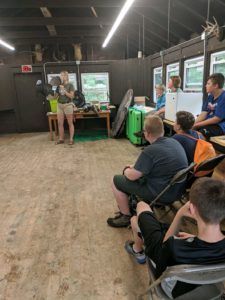 learning. For my first activity, I had the kids pair up and find different turkey regulations in the MDNR spring 2019 turkey digest and read them out loud. It is very important to stress the ethics and legality of hunting at a young age. One of the most exciting things about spring turkey hunting is the use of decoys and turkey calls. I brought several decoys, box and slate calls with me for the kids to “play” with. I informed them that there are different calls to be made and at different times/situations within the hunt. Soon the art building erupted in turkey calls. From there I shared a personal turkey hunting story and morphed an activity from it, asking the kids to create their own turkey hunting skit. They broke up into groups and had to create their own turkey hunting story while acting like either the hunter, turkey, hen or decoy. The kids left the art building laughing and smiling from the skits.
I head back down to camp next Thursday to meet a whole new group of hunting heritage campers and repeat a similar presentation. I was honored that Max thought of me to share about this wonderful bird.
The post Turkey-Time at Camp appeared first on Michigan United Conservation Clubs.
Recent Posts